Union CountySeptic
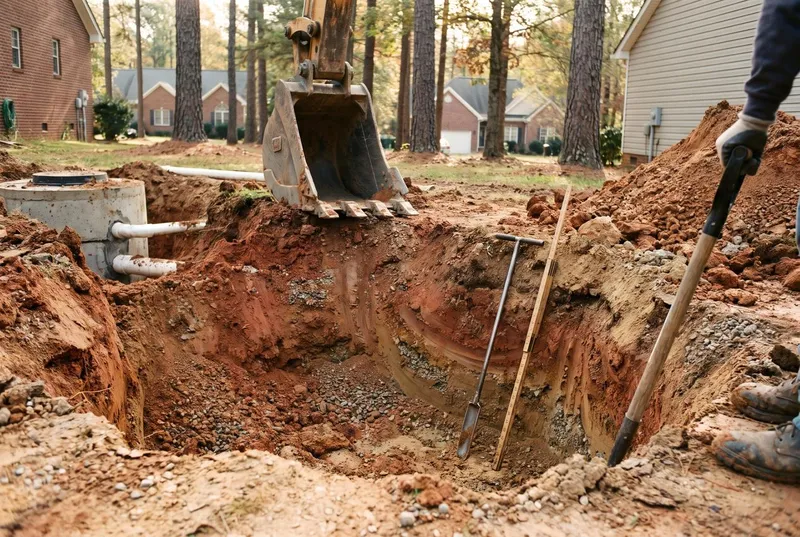
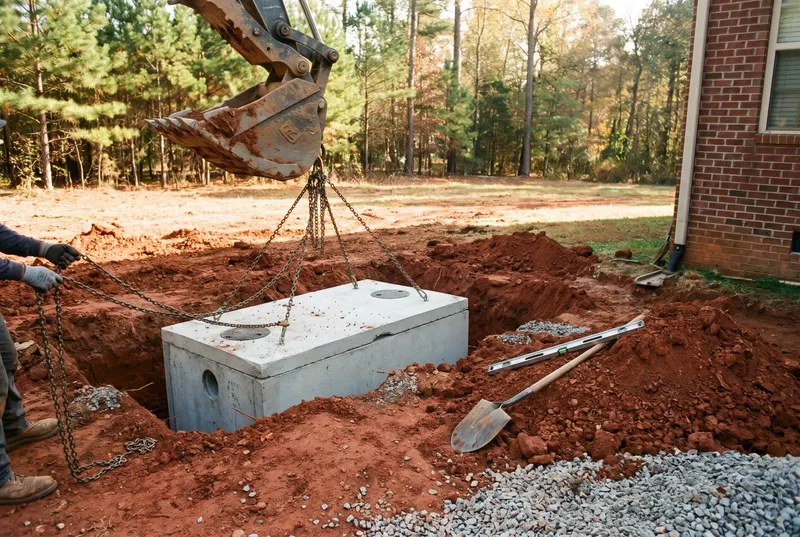
A new concrete septic tank being lowered into a red-clay excavation on a Waxhaw lot (sample photo)

Union County, North Carolina

Union County Septic | Septic Tank Installation, Septic Repair, Drain Field & Inspection Services

State-certified septic installers for new systems, replacements, drain field repair, pumping and home-sale inspections across Monroe, Waxhaw, Indian Trail, Weddington and Wesley Chapel. One call, a free site visit, a written quote.

Union County Septic puts a state-certified installer on the phone for the whole life of a system: a conventional or low-pressure-pipe system on a new lot, a 1,000 to 1,500 gallon concrete or polyethylene tank swapped for one that cracked, a drain field that went soft, an effluent pump that tripped its alarm at 11 pm, the pump-out every three to five years, and the inspection a lender wants before closing. Around here every one of those jobs runs through Union County Environmental Health. The soil scientist reads the backhoe pits, the $400 Improvement Permit names the system, the Construction Authorization prices it by type, and the county inspector stands over the open trench before a shovel of backfill goes in. The crew carries that file so you do not have to learn it.

Past the end of the sewer lines, which is most of the county, a wet patch over a Weddington drain field or a Waxhaw lot that the county sends to an engineered system is a normal Tuesday for our Union County septic crew. Our view is that pumping a tank is like the oil change on a truck: cheap, dull, and the thing people skip right before the expensive repair. Call the number at the top, or send the form at the bottom of the page. A certified installer calls back the same business day to set a free site visit, and the quote that follows is written, itemized line by line, and good for 30 days. See recent septic projects.

  • State-certified septic installers
  • Union County permit and soil evaluation handled
  • Same-week inspections and pumping
  • Conventional and low-pressure-pipe drain fields
  • Free site visit and written quote

Residential

Residential septic installation and repair in Union County

Row photos are labelled samples until the contractor sends job photos.

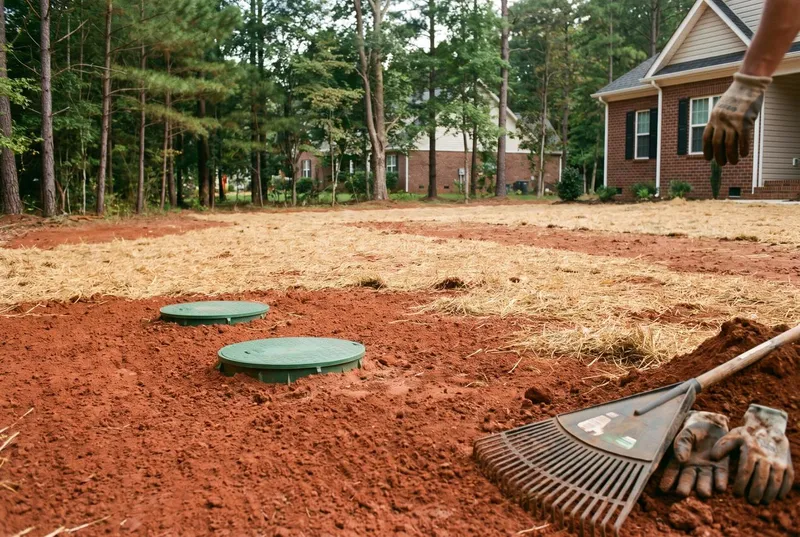
A finished septic installation with two riser lids at grade in raked red soil (sample photo)

Septic tank installation

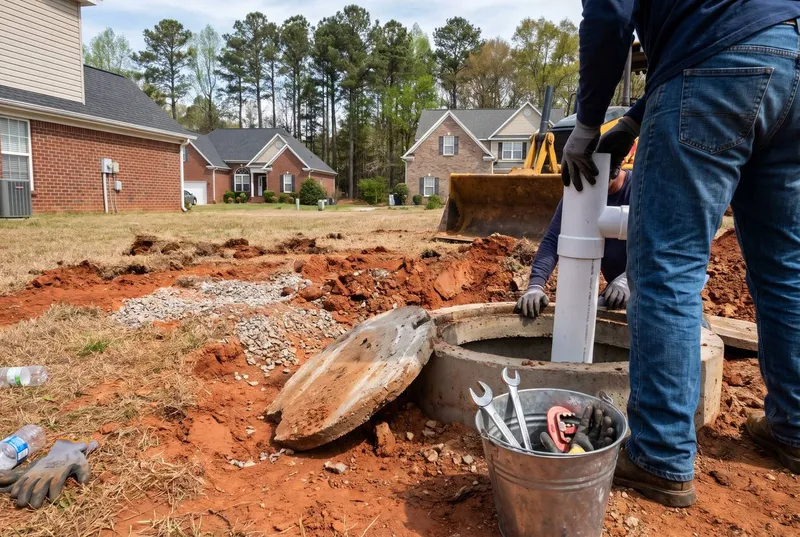
The county sizes a tank by bedrooms, not by how many people sleep in them. A 1,000 gallon tank carries most three- and four-bedroom homes here; five bedrooms and up get 1,250 to 1,500 gallons. Precast concrete goes in wherever the boom truck can swing over the hole, polyethylene where it cannot, and either one sits on a compacted bed so it does not settle and crack the inlet. The installer files the Improvement Permit and the Construction Authorization, sets the tank, runs the field, and calls the county for the inspection before anything is covered. Two to four days on site. In our opinion the day the inspector shows up is the best day of the job, because nothing gets hidden under the backfill.

An open tank access with a new PVC outlet baffle beside the cracked old one (sample photo)

Septic system repair

A cracked inlet baffle. A lid the mower caught. A pump that quit on a holiday weekend, roots in the outlet line, effluent pooling over the field in April. Finding the fault is the skill; most of the fixes take half a day. Union County puts repairs on a $100 repair authorization, and the crew pulls the original permit before the first shovel so the fix matches the system the county approved, not the one somebody guessed at in 1994. If the honest answer is replacement, you hear it on the first visit.

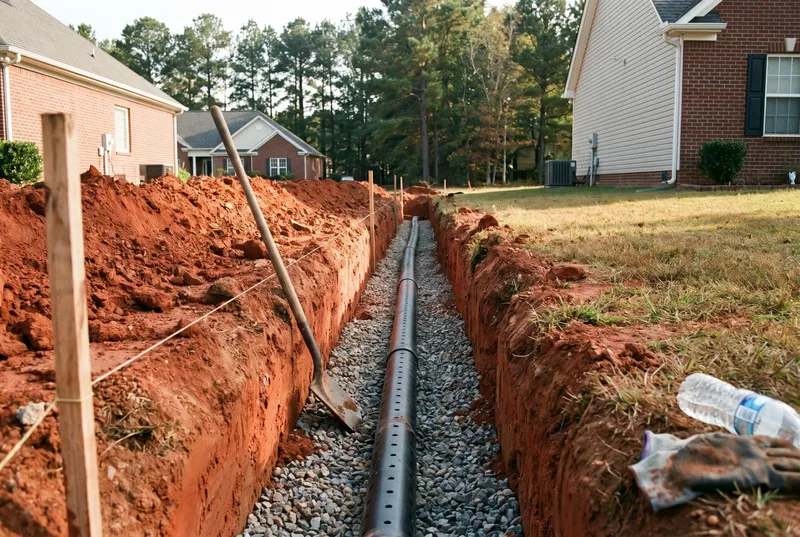
A gravel trench with perforated pipe laid in red clay (sample photo)

Drain field repair and replacement

Fields fail three ways. A toilet that runs or a washer going every day overloads the trenches with water; a truck parked over the lines crushes one; and thirty years of biomat seals the trench bottom until nothing drains. A camera and a probe tell which. Where the field can be saved it gets rested and the box releveled; where it cannot, the replacement goes in the repair area the original permit set aside for exactly this day. A field built right in this clay lasts 25 to 30 years. A replacement runs $5,000 to $12,000 plus the $100 county authorization.

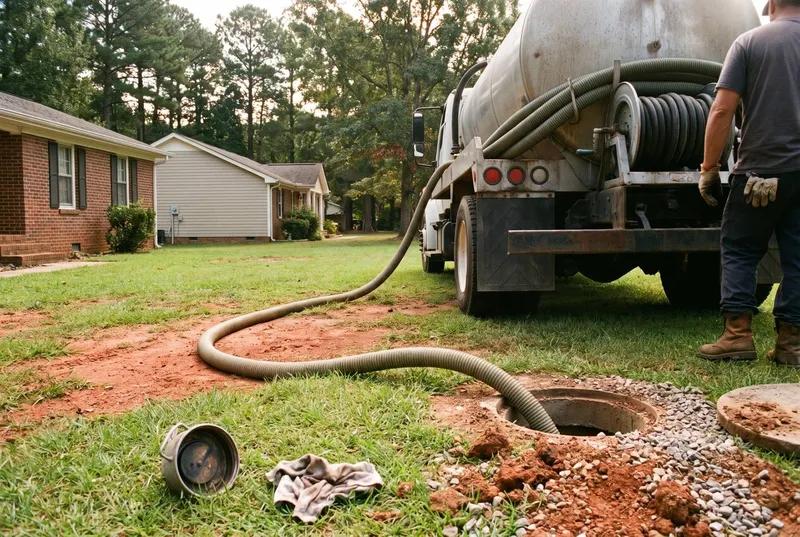
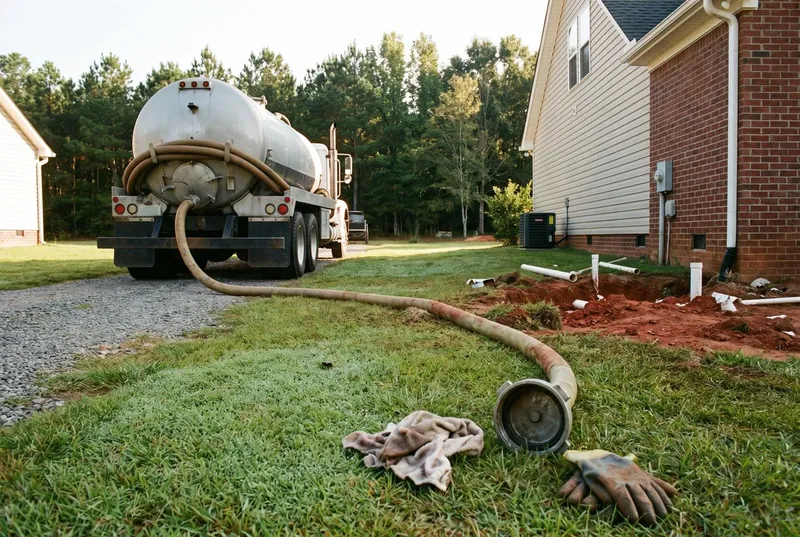
A vacuum hose running from a tanker truck into an open riser (sample photo)

Septic tank pumping and cleaning

Three to five years for a family of four on a 1,000 gallon tank; sooner with a garbage disposal, later for two retirees. The technician sticks the tank before pumping and reads the sludge and scum lines, so you learn whether you were early or late instead of guessing again next time. Effluent filter cleaned, both baffles checked, anything that wants a repair visit written on the ticket. Monroe-area pumping runs $350 to $550, and the published cost surveys for Monroe put the typical bill at $358 to $470.

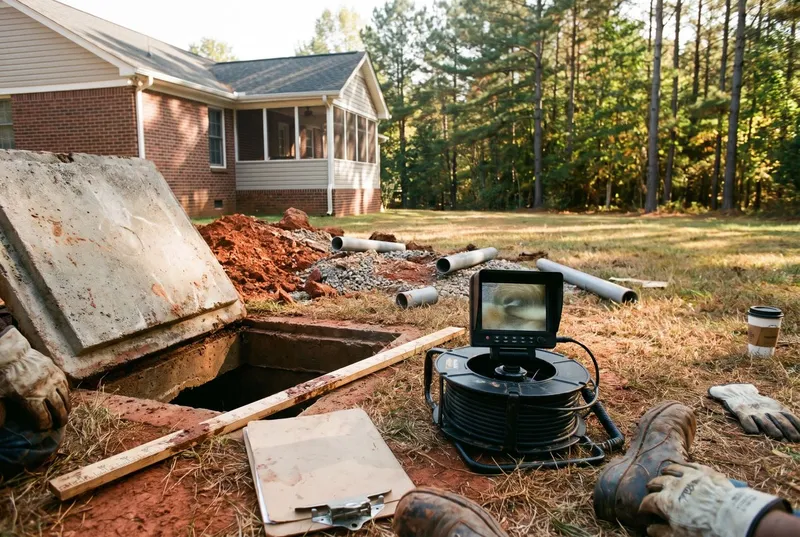
An open tank lid with a camera reel and monitor on the grass (sample photo)

Septic inspections for home sales

A buyer’s inspection means a hydraulic load test, a camera down the lines where the layout allows, the tank opened and measured, and the county’s permit records pulled so the report shows what was approved and what is in the ground. Written report in two business days, in the shape Union County lenders accept. We think a $450 inspection is the cheapest line in a $400,000 purchase, and the one most buyers out here try to skip.

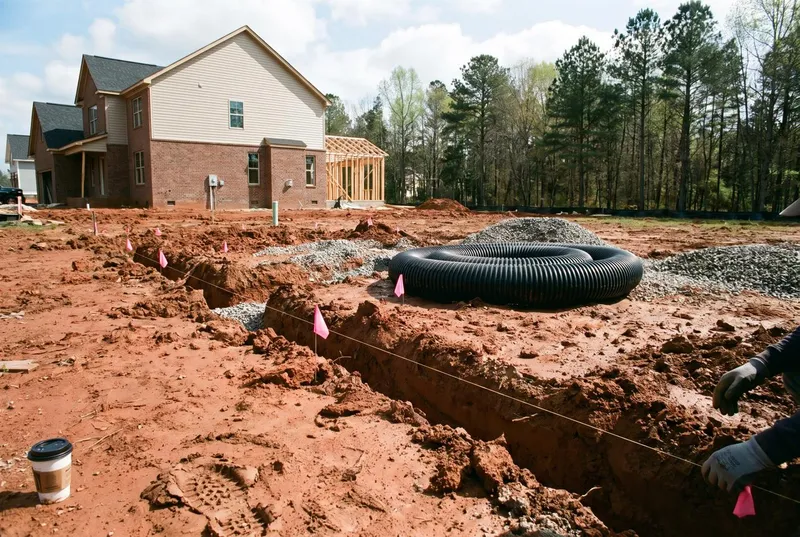
A grid of shallow trenches with small-diameter pressure lines and a manifold (sample photo)

Low-pressure pipe and engineered systems

When the soil evaluation rules out a gravity trench, the county calls for low-pressure pipe. Small-diameter lines are laid shallow across the whole field and dosed a few gallons at a time from a pump tank, so the clay never sees a flood. Aerobic treatment units, chamber trenches and drip dispersal cover the harder lots. Every engineered system carries an Operation Permit and a maintenance contract, and the installers set both up before the backfill goes in; the pump panel gets a label with the service number on it.

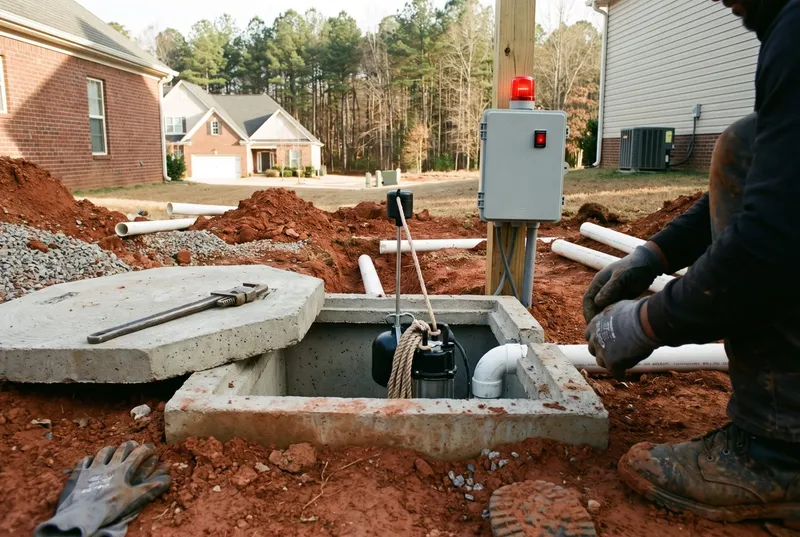
An open pump tank with a float tree and a control panel on a post (sample photo)

Septic pump and lift station service

Effluent pumps, float switches, control panels, and the red alarm light that means today, not next week. An uphill drain field or an LPP system lives on its pump the way a basement lives on its sump; when it stops, the tank fills in a day or two. The crew keeps the common half-horsepower effluent pumps on the truck, so a swap is usually done by the next business day, and a lift station rebuild is two days with the county notified.

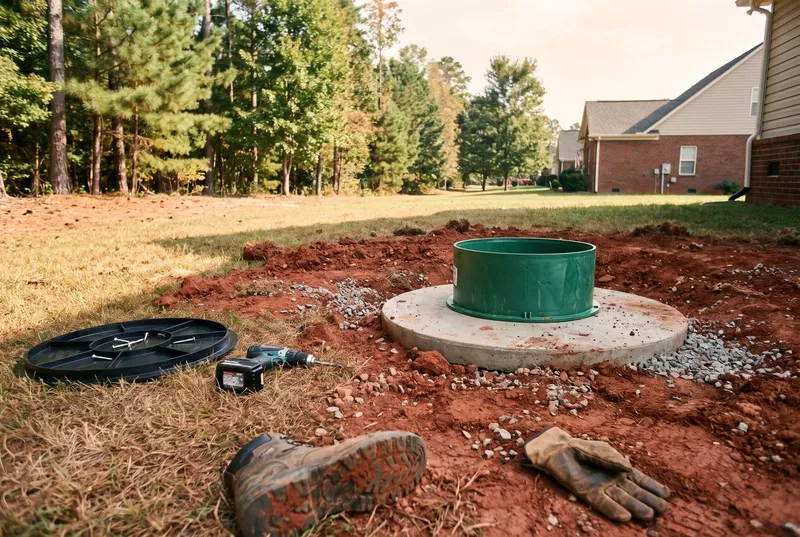
A new green riser set on a concrete tank at grade (sample photo)

Riser and lid installation

A grade-level riser means nobody digs for the lid again. Twenty-four-inch risers cut to grade, sealed to the tank with butyl, child-safe lids on stainless screws, and the lid position sketched on the as-built for the next technician. Most risers go on during a pumping visit, which saves a trip charge and a second hole in the lawn.

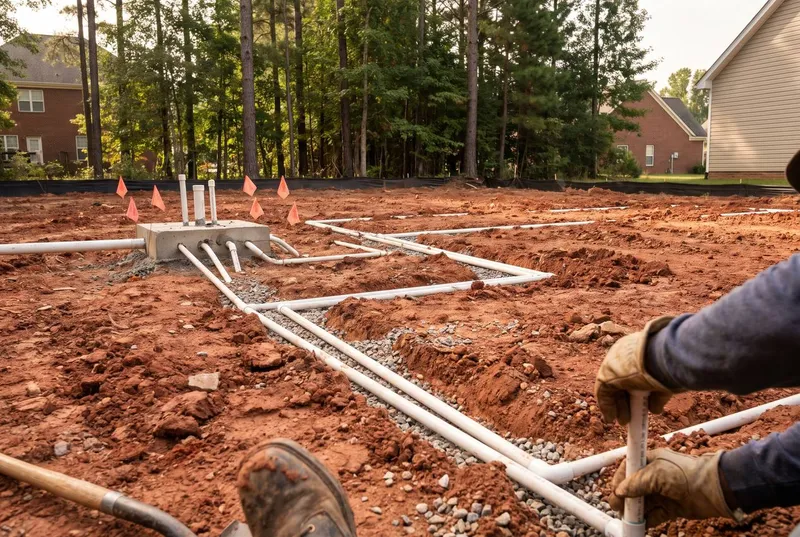
A house under construction with septic trenches staked in the foreground (sample photo)

Septic for new construction and additions

The county sizes the system by bedrooms, so a bonus room with a closet counts as one whether or not anyone sleeps there. On a new build the installer works from the county soil evaluation and the builder’s foundation plan and sets the tank before the driveway is poured. On an addition, the first question is whether the existing permit carries the extra bedroom or the field has to grow, and that answer comes from Environmental Health before the quote, not after.

An open concrete distribution box with four outlets and speed levelers (sample photo)

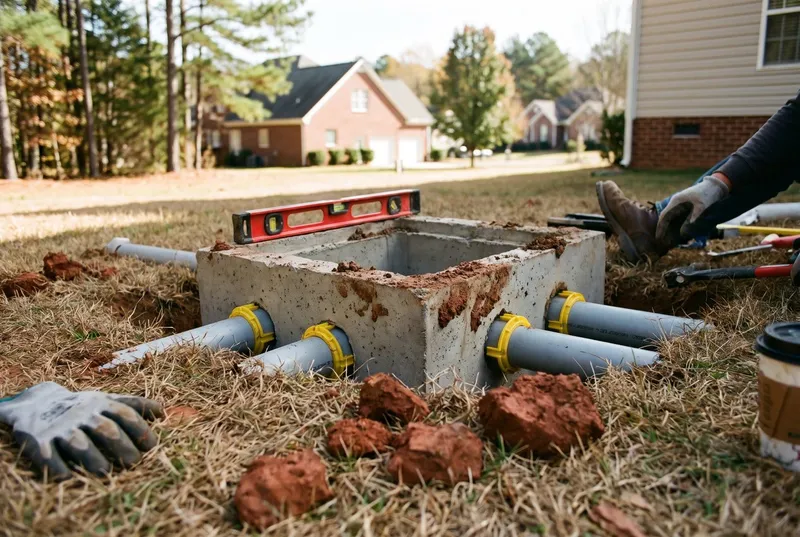
Distribution box repair

A distribution box that settles an inch sends every gallon down one trench and floods it while the other three sit dry; the single strip of greener grass over one line is the giveaway. The crew digs the box, levels or replaces it, sets speed levelers in each outlet so the lines share the flow, and checks the trench that was starved. Two hours of work that saves a $9,000 field more often than people expect.

Commercial

Commercial septic in Union County

Restaurants and food service

A kitchen on septic without a grease interceptor ahead of the tank will clog its field inside a year or two; it is the first thing the installers look for. Interceptors are sized by seat count and fixture load, pumped on a calendar the health inspector accepts, and the county’s commercial Improvement Permit, $500 at application, covers the system behind them.

Churches and schools

A sanctuary that seats 300 on Sunday and 12 on Tuesday cannot be designed for the average. The county reads it at the peak, about three gallons per seat per service, so expect a larger tank, a dosing pump and sometimes a holding tank for the fellowship hall kitchen. Weddings and Easter are the days the design is for.

Farms and equestrian properties

A barn apartment goes on its own permitted system; the wash rack and the stall hose stay out of it, because manure water kills a drain field faster than anything a house produces. Acreage buys room for setbacks, and the 100-foot separation from the well is the first line the installer draws on the plan.

Small subdivisions and multifamily

Four to twenty homes can share one cluster system with a single drain field and a management entity the county signs off on. The installers coordinate the engineered design, the operator agreement and the Type VI Construction Authorization, at $1,200 the largest permit class on the county’s fee schedule.

Specialty

Specialty septic services

A backhoe pit showing layered red and tan clay (sample photo)

Soil evaluations and site visits

North Carolina does not perc-test lots; the county soil scientist reads backhoe pits and writes up the layers. The owner supplies the backhoe, at least a two-foot bucket with a trained operator, and one application covers up to three acres. The installers arrange the machine and stand in the pit with the scientist.

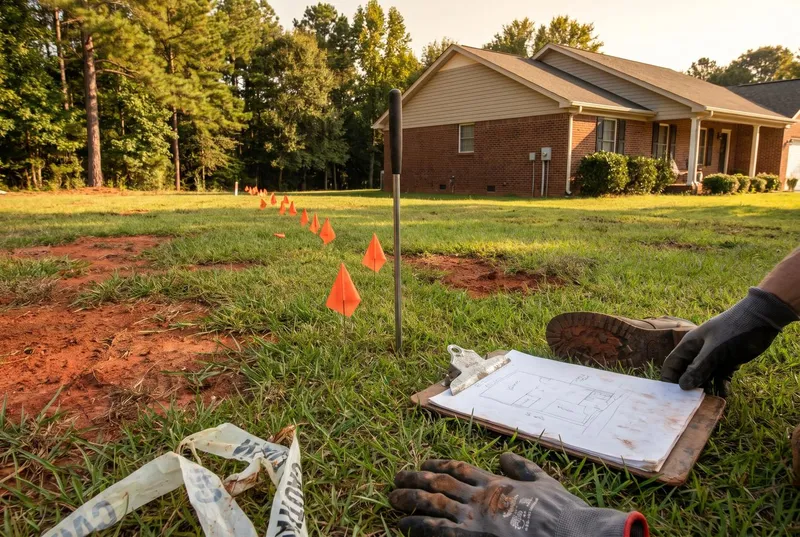
Marking flags and a probe rod across a lawn (sample photo)

Septic locating and mapping

Tank and field lines found from the county’s permit drawing first, then a probe rod and a camera where the paper is missing or wrong, which on a 1980s system is often. The as-built sketch that follows means the next pump-out starts at the right lid instead of a trench across the lawn.

A grease interceptor lid lifted behind a restaurant (sample photo)

Grease trap pumping

Interceptors behind restaurants and church kitchens on septic, pumped on a schedule the health inspector accepts, with the manifest for your file. A 1,000 gallon interceptor pumps in about an hour.

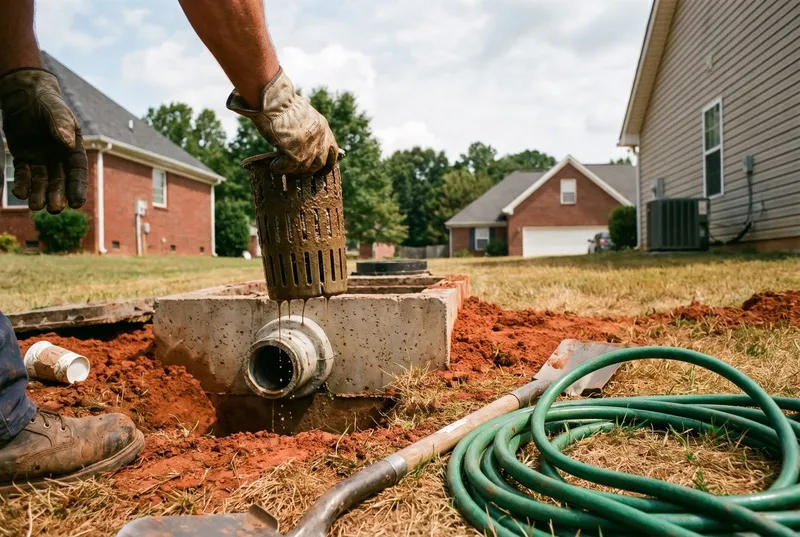
A slotted effluent filter lifted from an outlet tee (sample photo)

Effluent filter installation and cleaning

A slotted filter in the outlet tee holds solids back from the field for a few dollars of plastic. Fitted during a pump-out, rinsed with a hose at every visit after, and the single cheapest insurance a drain field can buy.

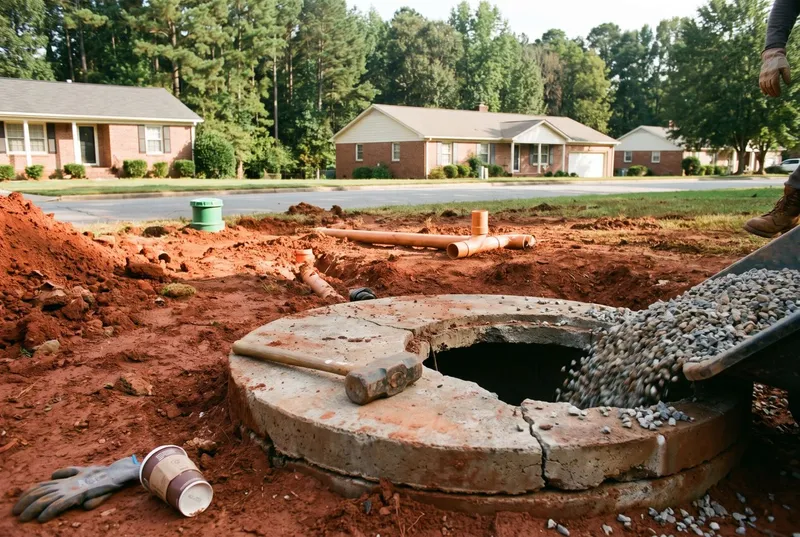
An old concrete tank being filled with gravel (sample photo)

Tank abandonment and sewer tie-in

Where Union County Public Works sewer reaches a street, the old tank is pumped, the lid broken, the tank crushed or filled with gravel, and the county’s abandonment application filed. The tie-in to the main is a plumber’s job the crew coordinates and schedules.

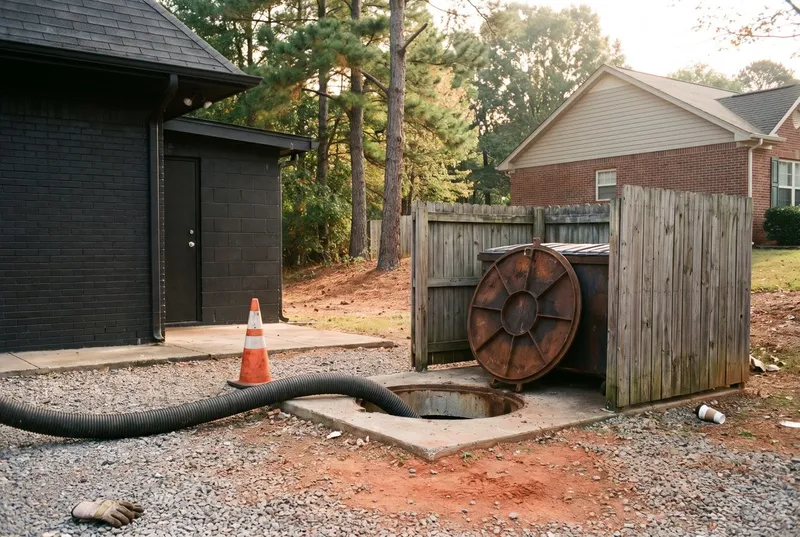
A vacuum truck and hose at a driveway (sample photo)

Emergency septic backups

Same-day pump-out for a backup and a straight answer on whether the tank, the pump or the field caused it, because the three cost very different money. Until the truck arrives: stop running water, keep everyone off the field, and leave the lid closed.

Cost

How much does a septic system cost in Union County?

Three things decide the price: the soil, the system type the county assigns to it, and how far the truck and the excavator have to travel across the lot. A conventional gravity system on workable soil runs $8,000 to $15,000 installed in Union County. A low-pressure-pipe or aerobic system on tight clay runs $15,000 to $25,000, because of the pump tank, the panel and the extra pipe. A drain field alone runs $5,000 to $12,000, pumping $350 to $550, a home-sale inspection $300 to $600. The county's fees sit on top and are listed in the last column so nobody meets them for the first time at closing. The written quote after the site visit is the price; everything on this page is a range.

ServiceTypical costAverage projectCounty fee on top
Conventional septic system, installed$8,000 to $15,000$11,500$400 permit + $200 authorization
Low-pressure pipe or aerobic system$15,000 to $25,000$19,000$400 permit + $450 to $600 authorization
Drain field replacement$5,000 to $12,000$8,500$100 repair authorization
Tank replacement only$4,000 to $8,000$5,500$100 repair authorization
Septic tank pumping, 1,000 gallons$350 to $550$425none
Home-sale inspection with load test$300 to $600$450none
Effluent pump replacement$900 to $2,200$1,400none unless the panel changes

County fees from the Union County Environmental Health fee schedule in force since August 1, 2024; confirm the current figure with the office at (704) 283-3553. Installer ranges are typical for the Charlotte area; your written quote replaces them.

Why us

Why homeowners call Union County Septic

Our process

1

Call and site visit

A certified installer calls back the same business day, pulls the county's permit records for the address, and walks the lot with you inside the week.

2

Written quote

Itemized line by line: tank, field, pump, permit fees and lawn restoration, with the county's own fees on their own lines. Good for 30 days.

3

Soil evaluation and Improvement Permit

The county soil scientist reads the backhoe pits the owner's machine dug; the Improvement Permit names the system type and the repair area.

4

Design and Construction Authorization

The system is drawn to the permit, the authorization fee is paid by system type and the dig date is set around the weather.

5

Installation and county inspection

Tank set, lines laid, pump wired if there is one, and the county inspects before a shovel of backfill goes in.

6

Operation Permit and walkthrough

The county issues the Operation Permit; the installer marks the lids, hands over the as-built sketch and the pumping schedule.

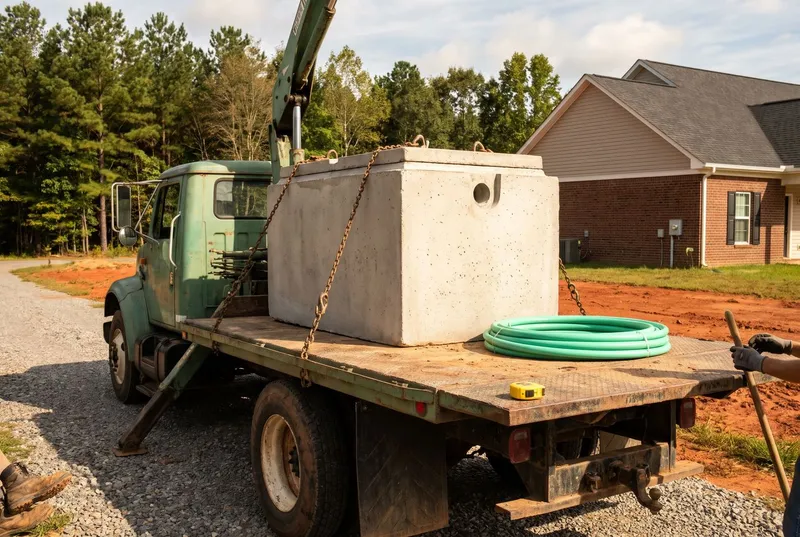
A precast concrete tank on a boom truck in a gravel drive (sample photo)

Materials and brands

Precast concrete tanks from a North Carolina plant for most installs; polyethylene where the boom cannot reach the hole. Schedule 40 PVC on every run, never thin-wall. Effluent pumps with a float tree and an audible alarm on a panel at the house, and gravel or chamber trenches depending on what the soil evaluation allows. Tank and pump brands are written on the quote once your installer confirms the line they carry; we would rather name the actual product than a brochure.

Timeline

A site visit inside a week of the call; a written quote inside two business days of the visit. The county's soil evaluation and Improvement Permit take two to six weeks depending on the season and when a backhoe can be on the lot, and the Construction Authorization follows the design. The dig is two to four days. The Operation Permit comes after the county's final inspection, usually the same week.

Union County permits and soils

What a Waxhaw or Weddington lot goes through before a tank goes in

Union County issues its own septic permits through the Environmental Health division's On-site Water Protection Program, and the path has four stops. First the soil evaluation: a county soil scientist walks the lot and reads backhoe pits, and for a new system the owner supplies the backhoe, at least a two-foot bucket with a trained operator, on the day. One application covers up to three acres. If the soil passes, the Improvement Permit says what kind of system the lot can carry and where it goes.

The Construction Authorization follows the design and is priced by system type, so a conventional gravity system costs less to permit than a low-pressure-pipe or aerobic system. The installer builds to the authorization, the county inspects before anything is backfilled, and the Operation Permit closes the file. Keep that permit: a buyer's lender will ask for it, and an addition that adds a bedroom has to go back through the office. It still surprises us how many sellers have never seen theirs.

Why so many lots here end up on low-pressure pipe: the Piedmont clay under Waxhaw, Weddington, Marvin and Wesley Chapel drains slowly, and when a gravity trench would sit wet the county calls for small-diameter pressurized lines dosed from a pump tank. Every permit also sets aside a repair area, the second field you hope never to build. Questions for the office: (704) 283-3553.

$400Improvement Permit, residential
4 stopsevaluation to Operation Permit
StopWhat happensCounty fee
1. Soil evaluation and Improvement PermitCounty soil scientist reads backhoe pits (owner supplies the backhoe); the permit names the system type and repair area$400 residential
2. Construction AuthorizationDesign approved; fee set by system type, Type II gravity to Type VI large systems$200 to $1,200
3. Installation and inspectionCertified installer builds to the authorization; county inspects before backfillincluded
4. Operation PermitIssued after the final inspection; keep it for the next buyer and any additionincluded

Fee schedule effective August 1, 2024, Union County Environmental Health. Repair authorization $100, redesign $125, commercial Improvement Permit $500.
Recent projects

Recent septic projects in Union County

Sample projects showing the format. Replaced with the contractor's confirmed jobs at intake.

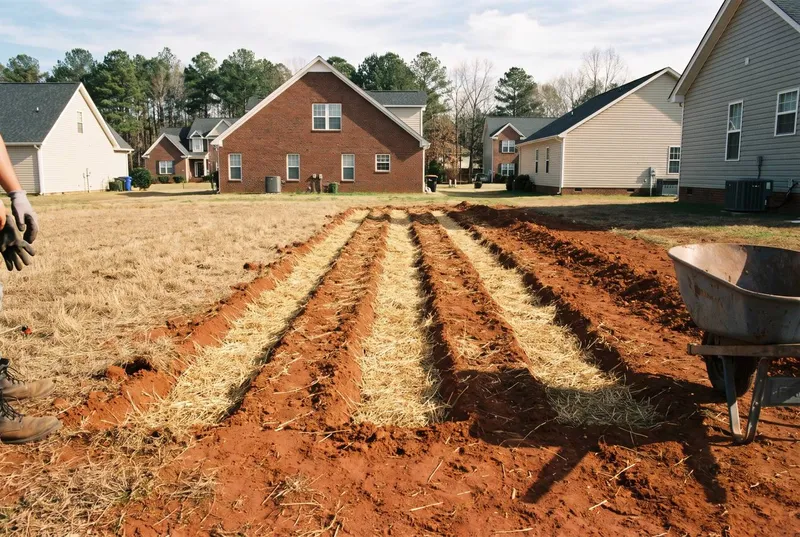
A backyard with five freshly backfilled trench lines under straw (sample photo)

Failed field replaced, Waxhaw

A 1990s gravity field under a one-acre lawn had sealed over with biomat. The replacement went into the repair area the original permit set aside, with a new distribution box and two risers; four days on site including the county inspection, straw down on day four.

Sample job. Drain field, about $9,500 plus the $100 authorization

A grid of shallow trenches with small-diameter pressure lines (sample photo)

Low-pressure pipe system on a new lot, Weddington

The soil evaluation sent a four-bedroom build to LPP. A 1,250 gallon tank, a pump tank with an alarm panel on the garage wall, six dosed lines across the side yard, and the Operation Permit in the buyer's hands before closing.

Sample job. LPP system, about $18,500 plus county fees

An open tank lid with a camera reel and monitor on the grass (sample photo)

Home-sale inspection and pump-out, Monroe

Hydraulic load test, a camera down both lines, the tank sticked and pumped, the county's 2003 permit pulled for the file, and the written report in the buyer's lender's inbox two business days later.

Sample job. Inspection and pumping, about $800

Service area

Serving Union County and surrounding areas

The installers Union County Septic schedules work the whole county: the Mecklenburg line at Indian Trail and Stallings, Marshville and Wingate out east, and the Waxhaw, Weddington and Marvin lots along the state line, where the newest subdivisions sit on the oldest clay. Monroe is home base. Not on the list? Call anyway; the crew drives into Anson, Stanly and Cabarrus counties for installs.

  • Monroe
  • Waxhaw
  • Indian Trail
  • Weddington
  • Wesley Chapel
  • Marvin
  • Stallings
  • Unionville
  • Marshville
  • Wingate
  • Mineral Springs

Questions

Septic FAQ

How often should a septic tank be pumped?

Every three to five years for a family of four on a 1,000 gallon tank. Sooner with a garbage disposal or a house full of teenagers, later for two retirees. The technician sticks the tank, so the next date is a reading, not a guess.

How much does a new septic system cost in Union County?

Conventional, $8,000 to $15,000 installed. Low-pressure pipe or aerobic, $15,000 to $25,000. On top of that the county charges a $400 Improvement Permit and a Construction Authorization of $200 to $1,200 depending on the system type it assigns.

How long does installation take?

Two to four days on site. Before that, the county's soil evaluation and permits take two to six weeks, so count on six to ten weeks from the first call to the Operation Permit in hand.

Do I need a permit in Union County and what does it cost?

Yes, for a new system, a replacement and a repair alike. Union County Environmental Health issues all three: the residential Improvement Permit is $400, the Construction Authorization $200 to $1,200 by system type, and a repair authorization $100. The installer files them.

What are the signs of drain field failure?

Spongy ground over the field, a sewage smell outside after rain, one strip of grass greener than the rest of the lawn, slow drains in the house, and a tank that needs pumping far more often than it used to.

What is an LPP system and why do so many Union County lots need one?

Low-pressure pipe: small-diameter lines laid shallow across the field and dosed from a pump tank a few gallons at a time. The county calls for it where the Piedmont clay drains too slowly for a gravity trench, which describes a good share of Waxhaw, Weddington and Marvin.

Is an aerobic system worth it?

Only when the soil evaluation says a conventional or LPP system will not work on the lot. It treats the water further so the field can be smaller, but it has moving parts, a maintenance contract and the Type V permit fee of $600.

Can you install on a lot that failed its soil evaluation?

Sometimes. A second evaluation on a different corner of the lot, a smaller bedroom count or an engineered system can turn a denial into a permit. Sometimes the honest answer is no, and it is far better to hear that before closing than after.

How do I find my septic permit records?

Union County Environmental Health keeps the Improvement Permit, the Construction Authorization and the Operation Permit on file by address. The inspector pulls them for a home-sale inspection, and a homeowner can ask the office directly at (704) 283-3553.

Will an addition change my permit?

If it adds a bedroom, yes. The permit sizes the system by bedroom count, so the county decides whether the existing field can carry one more or has to grow, and it decides before the building permit is issued, not after.

Concrete or plastic tank?

Precast concrete lasts longest and will not float in wet clay. Polyethylene goes where the boom truck cannot reach or the budget is tight, and it has to be bedded and filled with water as it is backfilled or the clay pushes it out of shape. Both are permitted in Union County.

What should I stop doing while the system is backed up?

Stop running water, skip the laundry, keep cars off the field and leave the tank lid alone. Call for a same-day pump-out; the technician tells you on the spot whether the tank, the pump or the field is the cause.

Which towns do you serve?

Monroe, Waxhaw, Indian Trail, Weddington, Wesley Chapel, Marvin, Stallings, Unionville, Marshville, Wingate and Mineral Springs, with installs into Anson, Stanly and Cabarrus counties when the lot is worth the drive.

Call or request a quote

Tell us about the property and a certified installer calls back

(704) 555-0100Monday to Saturday, 7 am to 6 pm. Same-day pump-outs for backups.

The site visit is free. If the system is failing, say so in the message and the crew moves you to the front of the week. Nothing on this page is a price; the written quote after the visit is.

Talk to a certified installer

Request a site visit

No charge for the site visit. The written quote follows within two business days.

Septic tank installation, repair and pumping across Union County

The site visit is free and the quote is written.

Call (704) 555-0100Free quote